The Power of Community: Volunteers Lead Change through Local Distributions
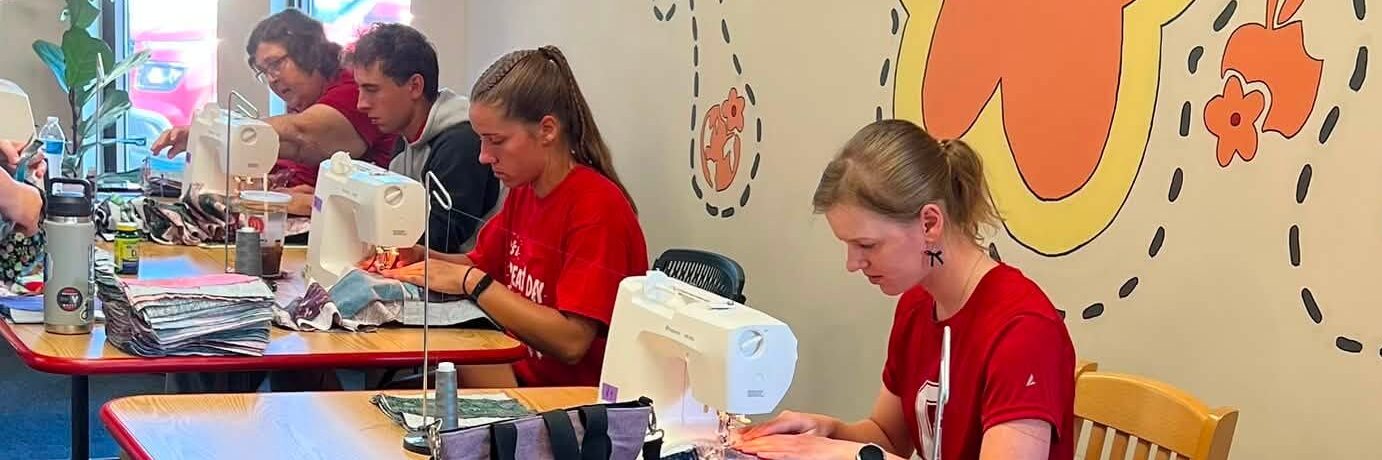
At Days for Girls International (DfG), the strength of our volunteers is one of the driving forces behind our belief in local leaders putting their compassion into action. The work of DfG Chapters and Teams happens around sewing tables in community centers, churches, and even household dining rooms, alongside their continuous advocacy to shatter the stigma around menstruation.
One of the most impactful ways volunteers advance menstrual equity within their communities of care is through local distributions.
What is a Local Distribution?
Period poverty, or the lack of access to menstrual health products, education, or other essentials needed to navigate menstruation, is both a global and a local problem: anywhere poverty exists, period poverty can exist too. Local distributions challenge DfG volunteers to address period poverty in their own communities. To reach these clients, DfG volunteers team up with nonprofits in their area such as food pantries, schools, women’s shelters, clinics, youth programs, or other social services to distribute menstrual products alongside menstrual health education in the form of sessions for clients, staff trainings, or printable resources.
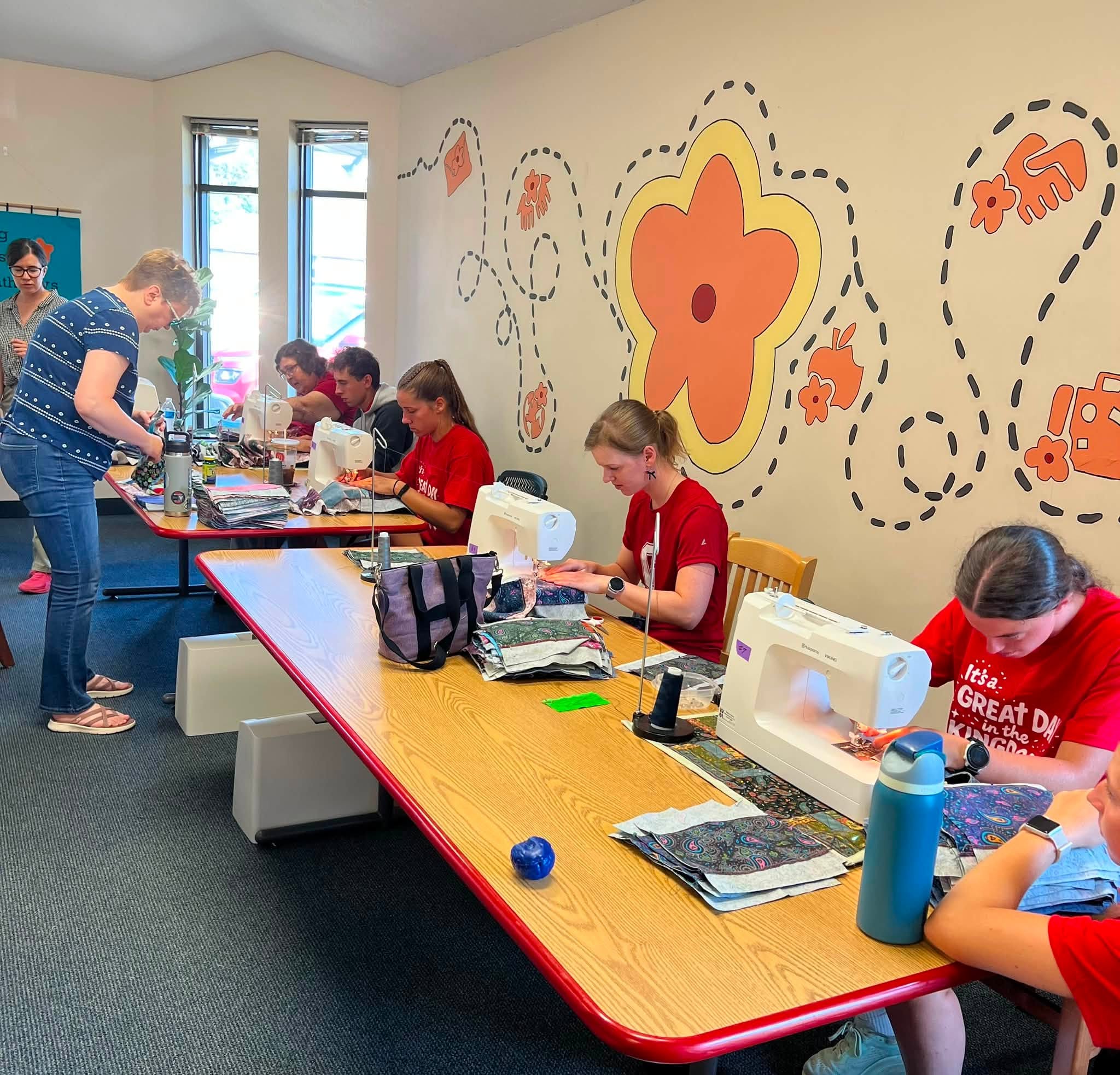
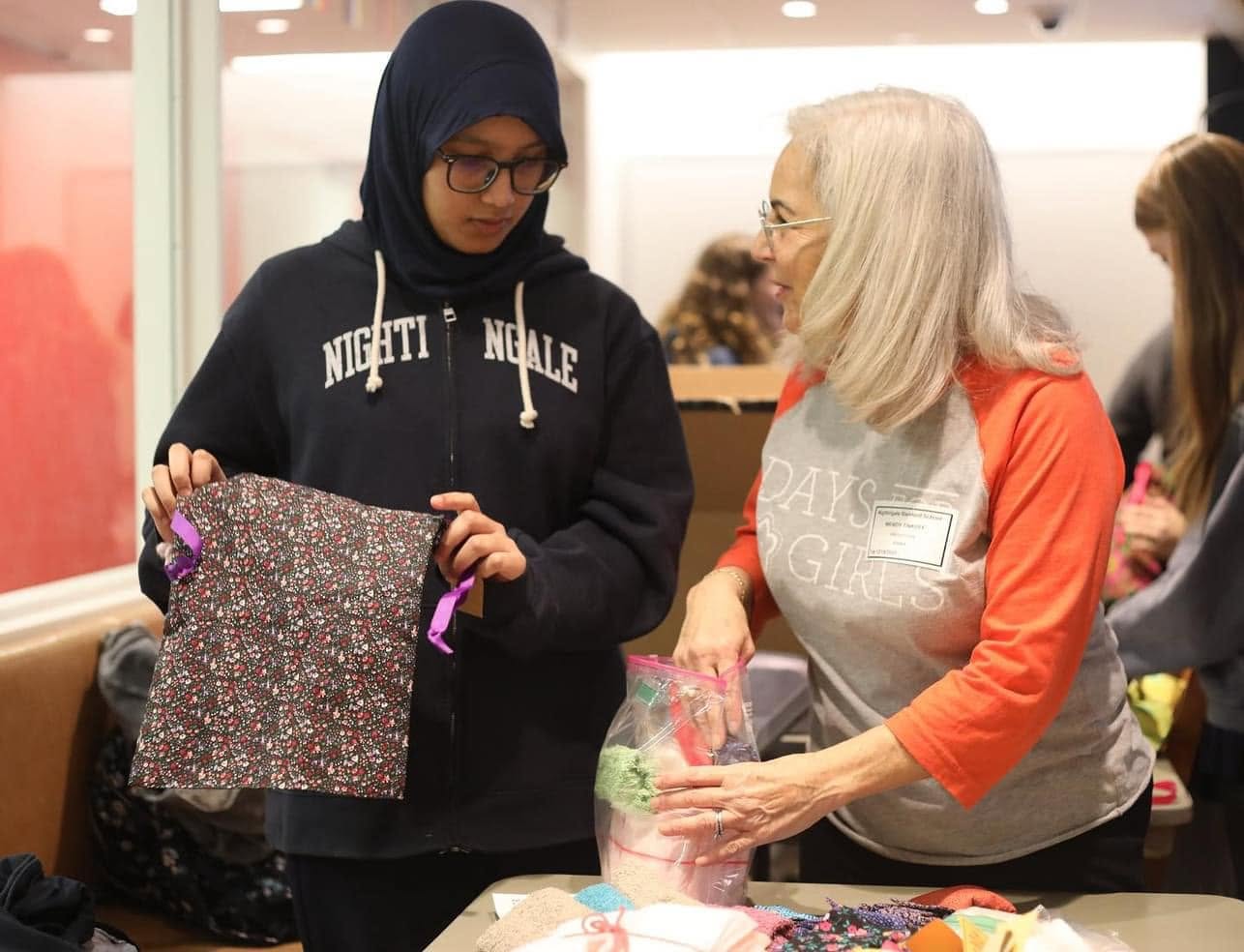
In their local distributions, volunteers sew, assemble, and distribute DfG Hybrid Kits, which include Days for Girls washable pads and the accompanying carry pouch, often along with other product choices like disposable pads, tampons, or a menstrual cup.
Through local distributions, DfG volunteers bring menstrual health resources – and the DfG mission – directly to their own community. Oftentimes, Chapters and Teams work to cultivate long-standing relationships with partners, bringing sustainability to their distributions and building a network of menstrual health advocates.
The short- and long-term impact produced from these distributions is a continual reminder that local service is not separate from DfG’s global mission; it is a crucial part of reaching every girl, everywhere.
Local Distribution Spotlights
Building Lasting Partnerships: Southwest Boise Idaho Chapter
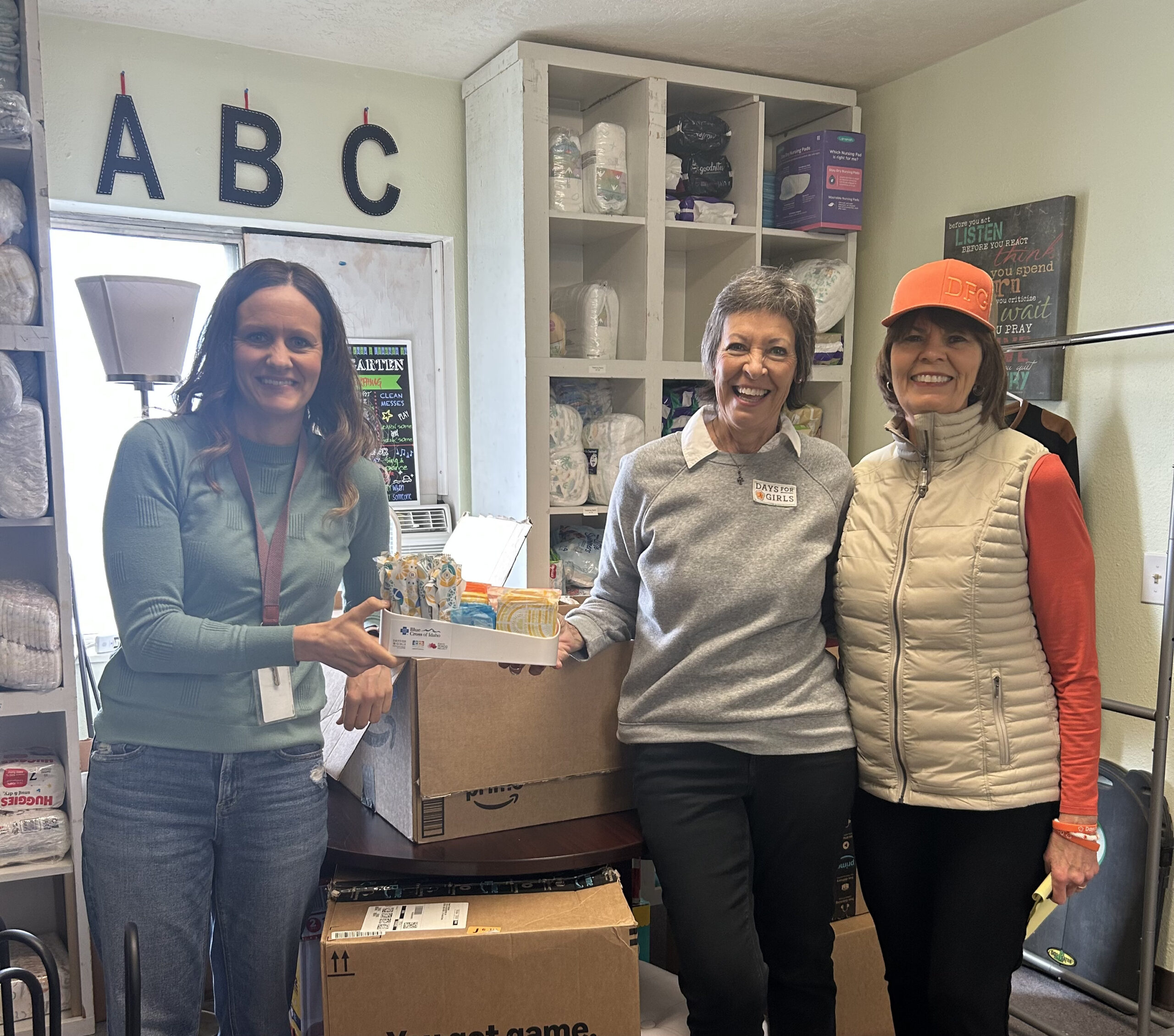
This past spring, the Southwest Boise Idaho Chapter conducted a local distribution across southern Idaho, in collaboration with the Idaho Period Project. With support from the Blue Cross of Idaho Foundation, the Chapter endeavored to improve menstrual care access in 49 remote community schools.
Because the Chapter had already implemented period product pilot programs in 138 schools statewide, they successfully leveraged their existing relationships and experience within school systems to make this goal a reality. Of the 49 schools served during the distribution, the Southwest Boise Chapter already had a presence in 29 thanks to their years of advocacy work.
The Chapter distributed 550 period product packs during this project and kept the impact going by launching pilot programs in 13 additional schools. They continued shipping period products directly to remote schools, ensuring students have continued access to the menstrual care they need.
The success of this distribution is a testament to the Southwest Boise Idaho Chapter’s efforts building lasting relationships to ensure that menstrual care is a priority, not an afterthought.
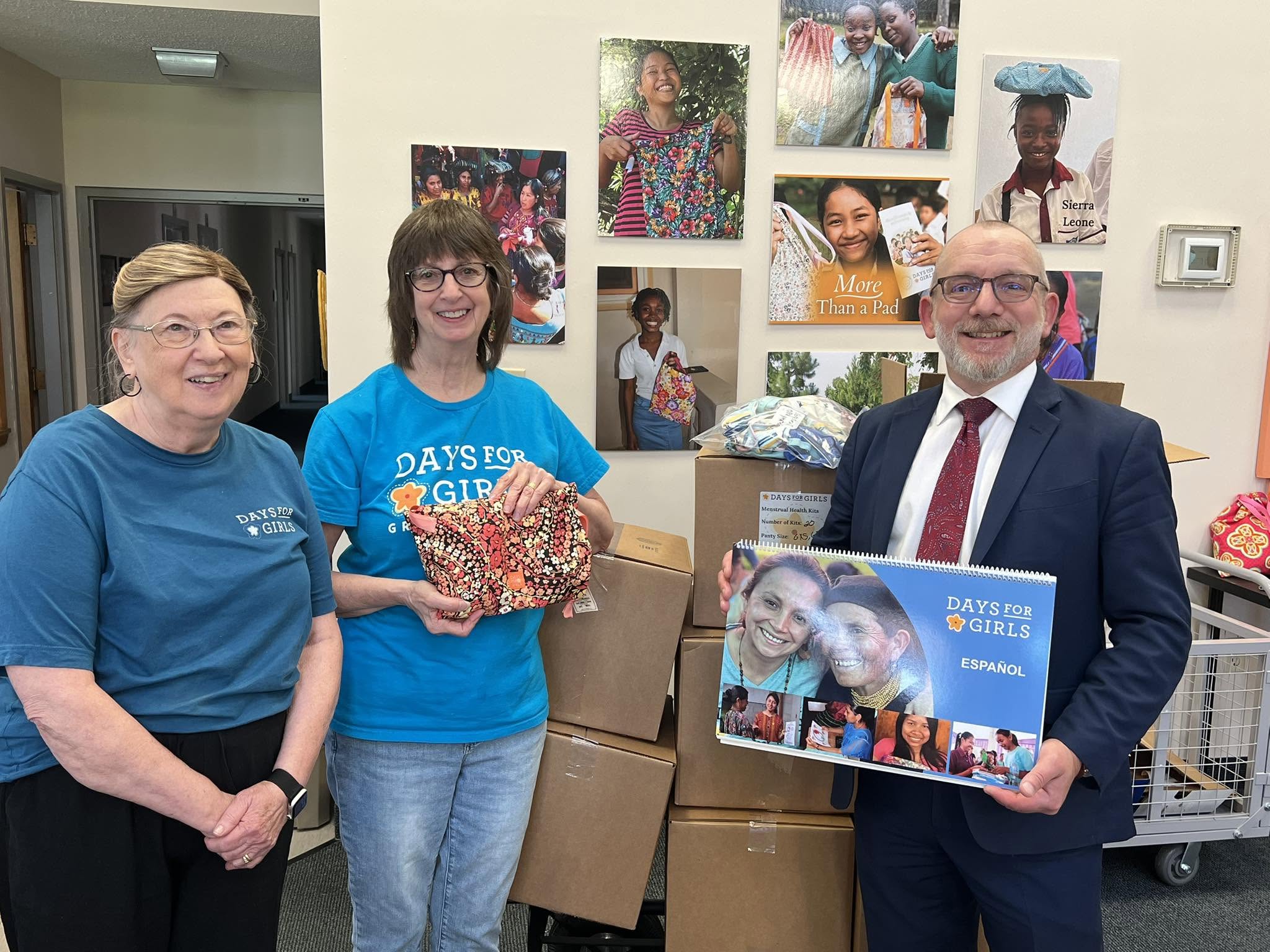
Care in Every Stitch: New York City Chapter
In March, the New York City Chapter carried out a local distribution at a resource fair at the St. Paul & St. Andrew United Methodist Church in the heart of New York City. The fair supported asylum seekers and disadvantaged residents with basic supplies.The Chapter had meaningful interactions with Reverend Lea Matthews, who leads the outreach program at the church. The Reverend remarked that the women reached through the distribution love the beautiful fabrics of the DfG Kits, and that they feel cared for and seen through the distribution of menstrual products.
For the New York City Chapter, local distributions give them the opportunity to help people right in their own neighborhood.
“We love knowing that people will receive the kits the same month we assemble them,” said Hilary Klotz Steinman, Chapter Co-Director. “The work we do at our monthly meeting will have an immediate impact.”
Sustainability in Action: Grove City Pennsylvania Team
Grove City Team members Ruth Magee and Karie Charlton partnered with Slippery Rock University’s Macoskey Center, Women’s Center, RockPantry+, and peer educators to deliver a presentation on sustainable period products.
At the presentation, students learned about the menstrual cycle and reusable period products, each receiving a Hybrid Kit with DfG washable pads and a menstrual cup. Students engaged in conversation with the Team following the presentation, asking thoughtful questions and excitedly choosing the Kit in the colorful drawstring bag that they liked the most.
Additionally, the Team replenished the RockPantry+ and Women’s Center with disposable and reusable period products for students in need. The Team looks forward to returning to the university to incorporate their learnings in similar events this school year.
“For us, this was not a ‘one-and-done’ event, but the start of building relationships with the University so that we can continue to supply them with menstrual health products in the future,” said Ruth Magee, Grove City Team Leader.
Bringing it Home
DfG volunteers go beyond just providing period products: with each distribution, they deliver essential menstrual health education and engage with the organizations already rooted in their communities to carry out this integral work, building sustainable avenues for long-lasting, locally led change.
Local distributions offer an important reminder of how anyone can make a positive impact: sometimes, the best place to begin is in your own backyard.