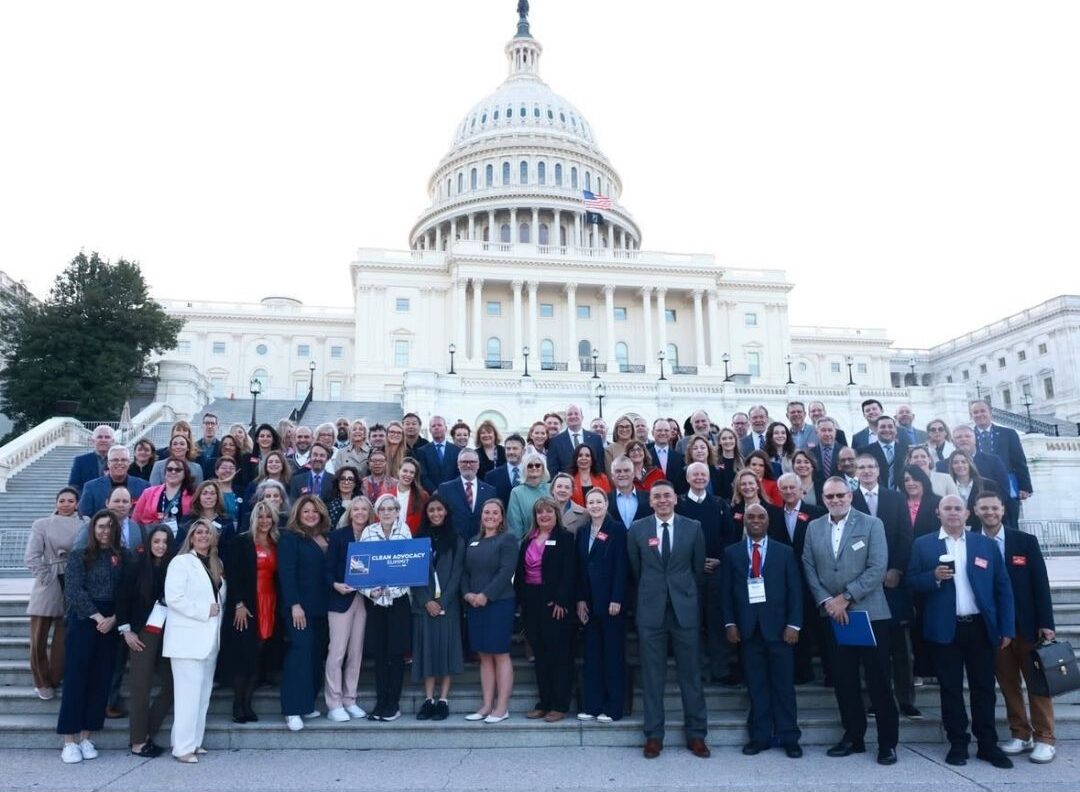
Days for Girls is pleased to announce the release of the U.S. State Menstrual Health Report Cards. Launched together with ISSA, The Association for Cleaning and Facility Solutions, at the recent Clean Advocacy Summit, the report cards are a new analysis of state-level menstrual health policy designed for easy understanding and communication between advocates and decision-makers.
What Are the Menstrual Health Report Cards?
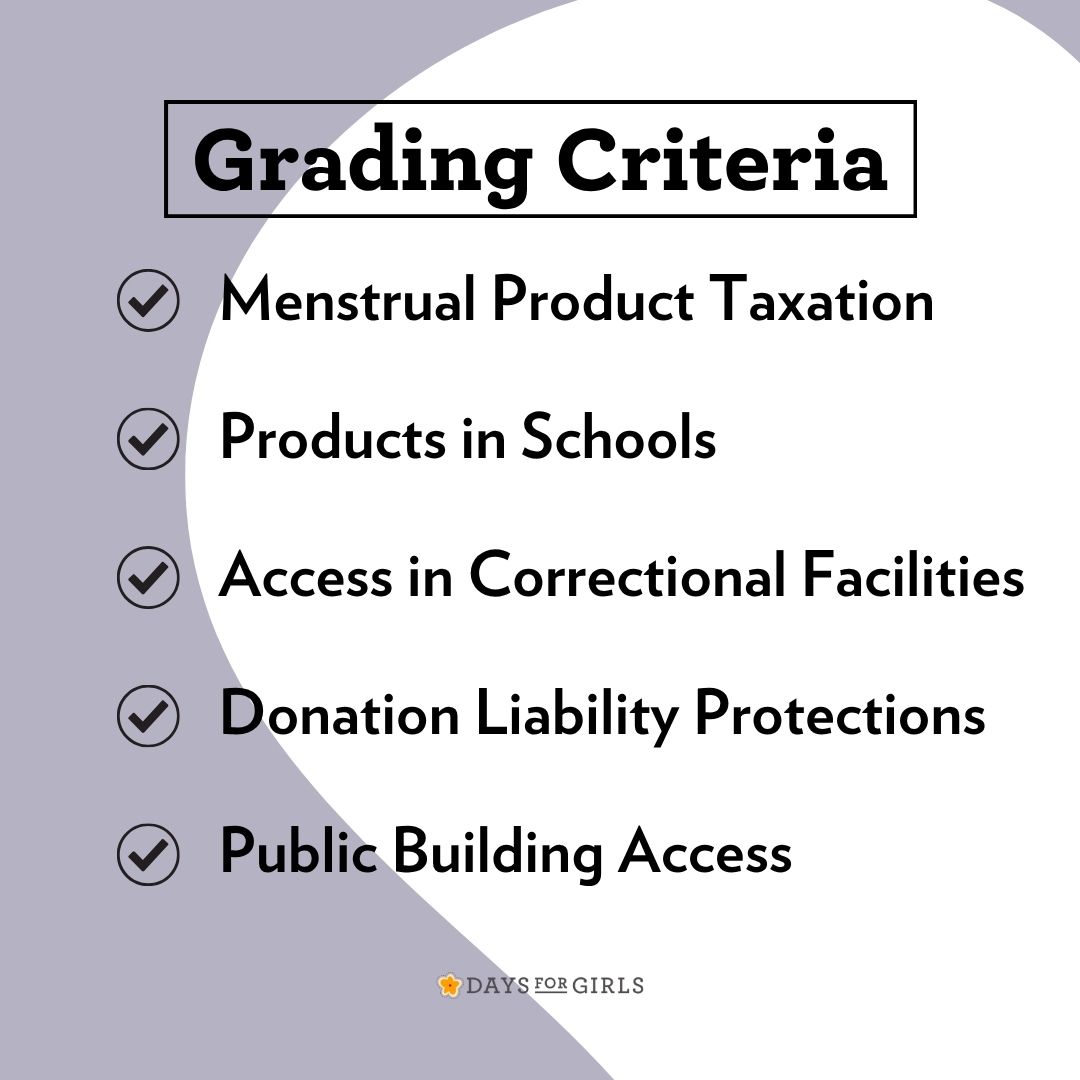
The report cards assessed each state in five policy areas of menstrual product access:
- Taxation
- Provision in schools
- Provision in incarceration facilities
- Provision in public buildings
- Liability protections for menstrual product donations
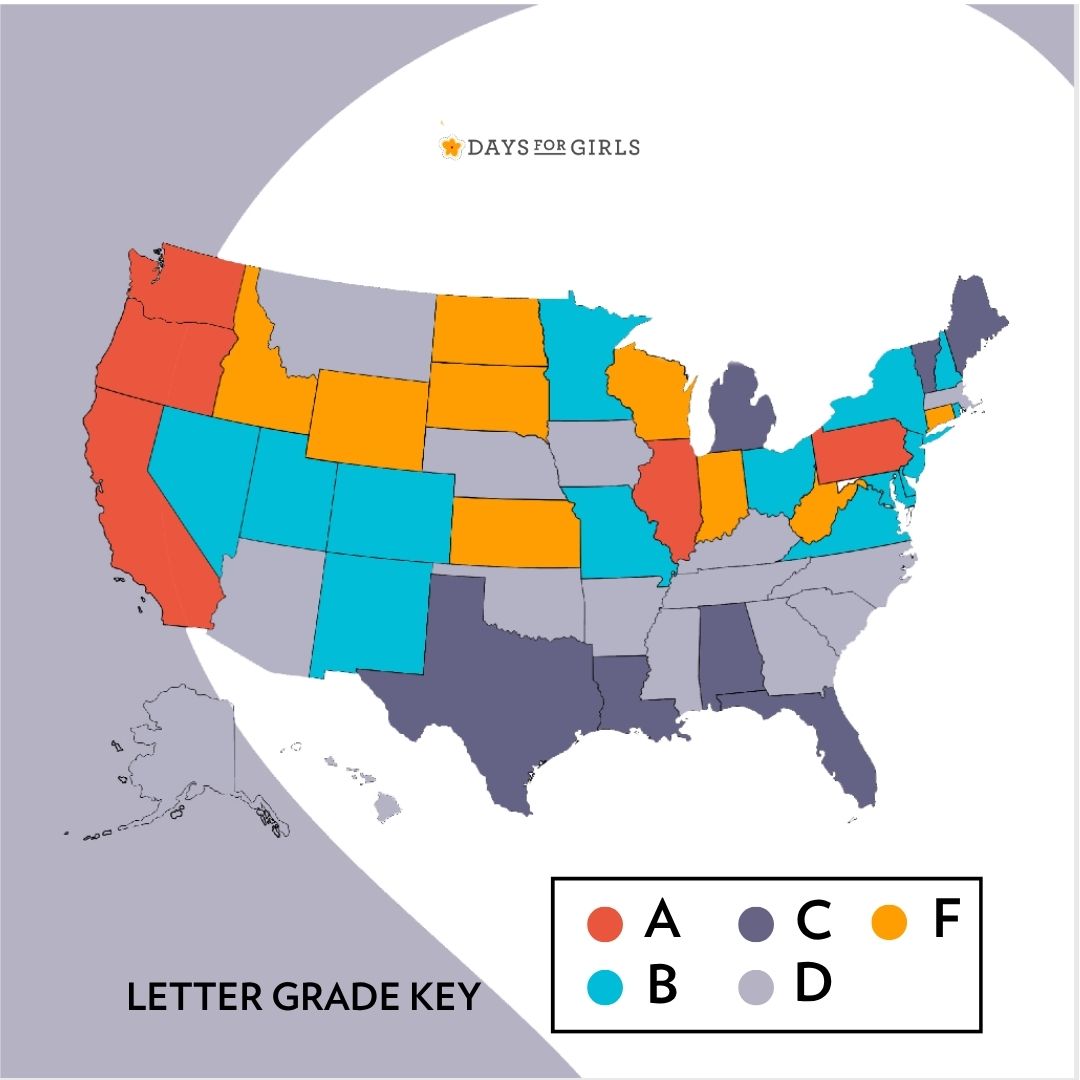
Together with other member organizations from the National Coalition to End Period Poverty, Days for Girls created a grading system that scores state policies as “A-F” letter grades. Each state received a grade for all five policy areas as well as an overall letter grade corresponding to a 4.0 grading scale.
A Call to Action for Local Leaders
15 states scored a “D” or below overall letter grade – and no state achieved an “A” in all five policy areas. Only four states earned overall “A” grades, and two states earned 0.0 scores with zero policies in place to address any of the five policy areas. This data and the data from peer state policies can help advocates raise awareness about menstrual health and period poverty in their community.
“Local leaders in the U.S. can use these report cards to quickly see where their state is performing well and where advocacy is still needed,” says Diana Nelson, Senior Global Advocacy Director at Days for Girls. “No matter how old you are, no one likes to see a failing grade.”
The report cards also revealed that every policy area had states that achieved an “A” grade – and that these top-performing states transcended party lines. This finding was surprising yet exciting to Aditi Subramanyam, the research volunteer and member of the Days for Girls Youth Leadership Committee, who supported the development of the report cards.
“I was excited to work on a resource that provides insight on menstrual health inequities for vulnerable populations,” says Subramanayam. “It was interesting to learn that political leanings did not dictate a state’s ability to pass menstrual health policy. There were several states across the political spectrum that were model examples of what we hope to one day achieve nationwide.”
Uniting Advocates in a Divided Landscape
The report cards do more than articulate the policy gaps remaining to be filled: they also highlight menstrual health as an ideological common ground that has been championed by advocates for education, workforce development, gender equality, and public health & hygiene. This analysis shows that when governments are informed about the issue and provided with tangible solutions, they see the value in ensuring menstrual health needs are met.
“Decision-makers join the menstrual health conversation from their unique policy lenses, and that focus area could be anything from pediatric health or disaster relief,” says Jess Strait, Senior Global Advocacy Manager at Days for Girls and lead author of the report cards. “The task ahead of advocates today is to educate our leaders about how menstrual health not only complements those other policy priorities, but is necessary for achieving them. That’s where the report cards can be a tool to support those conversations with evidence and recommendations.”
The State Menstrual Health Report Cards are available now to view and download for advocates who are ready to help their state turn a lacking grade into period positive policies.