Around the world, people are responding to life in quarantine. We asked leaders in our country offices how COVID-19 is impacting their work with Days for Girls and their daily lives.
Ghana
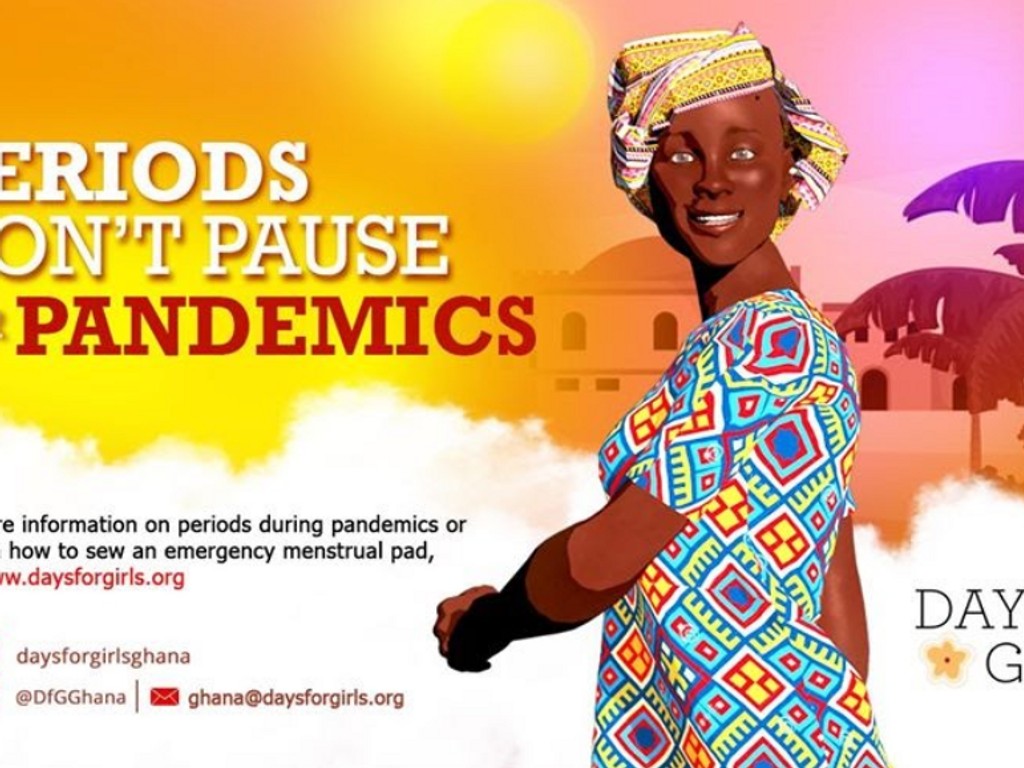
In our country office in Ghana, staff and enterprise leaders have been under lockdown and the government has taken extra precautions and made face masks compulsory when in public. In response, the team quickly mobilized to create public health and hygiene materials including a series of posters, PSA’s and a video on managing your period during COVID.
Guatemala
 In Guatemala, the team has also been practicing social distancing. Similar to the other countries where Days for Girls is operating, Guatemala has limited hours during which business are open and allowed to operate. Markets are only open in the morning, and a nationwide curfew is in place from 4:00 p.m. to 4:00 a.m. daily. Only essential personnel are allowed out of their homes during this time. This has allowed the team to continue their work during a few limited hours a day in safe and socially distant spaces. In addition to making menstrual kits, the team has also been producing face masks to ensure the safety of the community and medical personnel.
Uganda
In Kampala, the team has also been providing health and hygiene materials, as well as safety tips for social distancing. Production of menstrual kits was halted as the country went under stay at home orders and closed its borders, requiring materials and machinery (sewing machines) to be returned to the office where they could be properly cleaned and sterilized. Now, the team has been working hard on materials and instructions including this video showing how to sew your own emergency menstrual pad and washable liner during quarantine.
Nepal
 In Nepal, not only are the enterprise leaders under lockdown, but all movement on the roads (whether by vehicle or on foot) is prohibited – making it very difficult for women and girls to get to menstrual supplies they need. The team is working on instructions to create your own menstrual kits, and deepening partnerships with local schools to provide educational materials and making themselves available for any questions from students. Last week they delivered DfG Kits to disabled girls who were unable to leave their communities to get needed supplies.