What does it take to create lasting change in menstrual health? Is it access to products? Education? Community support?
The answer is all of the above, but how that change happens can look very different depending on where you are.
At Days for Girls, that approach often takes shape through Social Enterprises.
 A Social Enterprise is a locally owned and operated business that produces and distributes Days for Girls Kits and menstrual health solutions within its own community. These social enterprises are led by individuals who understand the unique needs, challenges, and cultural context of the people they serve. Rather than relying solely on external supply chains, Social Enterprises create a model where access can continue and grow from within.
In 2025, Days for Girls Social Enterprises around the world produced and distributed 141,450 Kits.
This matters because access to menstrual health is not just about availability. It is about consistency. It is about proximity. It is about having solutions that are not only present today, but still accessible months and years down the line.
In Kenya, Sociall Enterprises are producing thousands of Kits to support ongoing and upcoming projects, ensuring that menstrual health solutions are made locally and distributed within the same communities. In 2025, social enterprises in Kenya distributed 45,915 Kits, while also supporting educator training that brings menstrual health education into schools.
In Ecuador, the Days for Girls Social Enterprise is producing Kits as part of the EmpowerHer Ecuador project, expanding access in coffee and tea-growing communities.
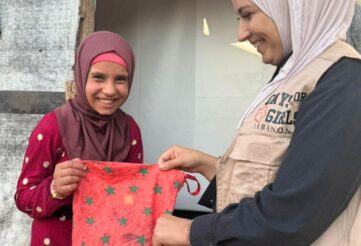 In Lebanon, a Social Enterprise run by Syrian refugees and Lebanese women is creating Kits while also creating opportunities. In 2025, this enterprise reached 900 refugee women and girls, with production led by women within the community. The team is working towards reaching an additional 1300 refugee women and girls this year. This model not only supports access to menstrual health products, but also creates income-generating opportunities and builds local capacity in a way that extends beyond a single project.
Across each of these examples, the model looks slightly different, shaped
by the needs of the community. But the foundation remains the same. Local leadership. Local production. Local impact.
This combination is what allows the work to continue. It moves beyond one-time distribution and becomes something that communities can carryforward on their own.
Social Enterprises represent a shift away from short-term solutions toward approaches that prioritize sustainability, dignity, and long-term access.