Maya Devi Khaitu, DfG’s Nepal Country Director, understands firsthand how stigmatized and misunderstood menstruation often is in her country. Maya grew up in a small town, watching her older sister and aunt stay away from the rest of her family while menstruating. When she got her first period, Maya explained that she did not fully understand what it was or what it meant. She did not have access to proper menstrual supplies and remembers being given a piece of cloth to manage her menstruation.
“Psychologically, it’s so scary and embarrassing because of the culture around periods,” Maya explains. She even began “praying she was a boy” due to the shame she felt because of menstruation.

Her experiences helped her develop a passion for equity. Maya began her career working in human rights, advocacy, and women’s health issues, including period poverty. She started working with DfG as a volunteer in February 2015, became a program officer in September 2016, and was appointed country director in January 2019. When she first started at DfG, she noticed that all the girls she interacted with in Nepal became shy when the topic of periods was raised. Through her continuing work and ongoing conversations about menstrual health in her communities, Maya hopes that menstrual stigmatization can be reduced.
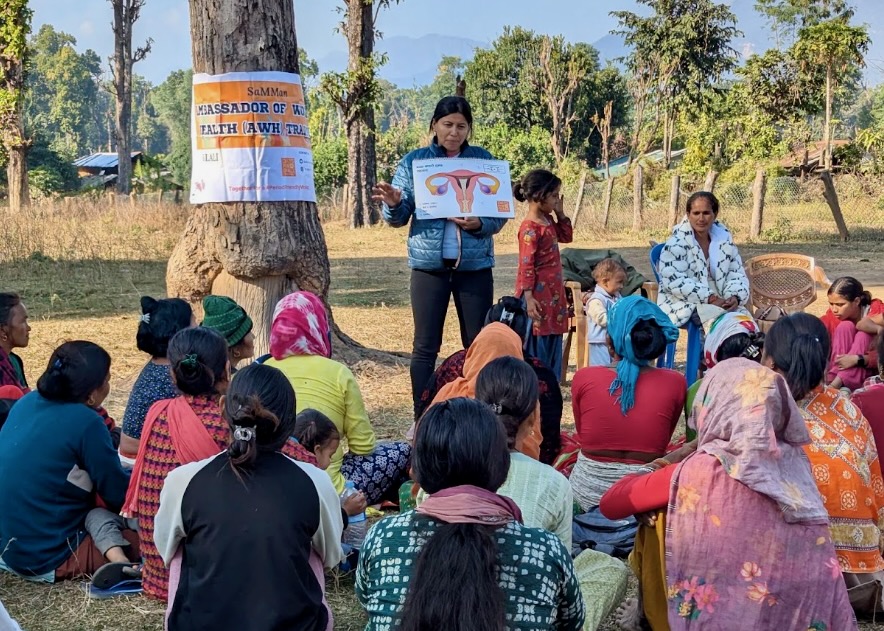
In Nepal, DfG has programs that reach girls as young as seven or eight years old. At this age, the sessions are fun and interactive, incorporating games, singing, and storytelling to introduce the subject of menstruation. As the girls grow older, the programming evolves, becoming more substantial, formal, and focused on education.
One of Maya’s favorite programs is DfG’s Men Who Know program, which educates boys and men about menstruation, encourages them to be allies, and creates more period-friendly environments. Maya believes that men and boys need to be educated on menstruation and the importance of menstrual health for society to successfully destigmatize the topic.

One of the biggest challenges Maya faces in her work is reaching rural communities in Nepal, where access to technology and education is limited. She hopes to connect with more of these communities over time and help shift the perception of menstruation from a taboo topic to a natural, accepted part of life.
Looking ahead, Maya hopes to increase the provision of washable pads in Nepal and continue to advocate for improved water, sanitation, and hygiene standards in public spaces. She uses communication channels, such as radio shows and community events, to increase public awareness and knowledge of period poverty.
Maya is a passionate and driven changemaker who, in her own words, is “proud and grateful” to do this important work every day. DfG is equally proud to have her leading the charge in Nepal to destigmatize menstruation and increase access to menstrual products.