Every Girl. Everywhere. Period.
When Days for Girls set a goal this high, we knew it would require a combination of volunteers, social enterprises, and partners all over the world. In fact, in the same year that we launched our first Days for Girls Chapter, in the United States, we also offered our first Make Your Own Kit training, in Zimbabwe. Soon after, our efforts began to prove that a Days for Girls Enterprise Program could work, putting menstrual health solutions and education directly in the hands of women in their own communities.
It’s been less than five years since we launched our first official Days for Girls Enterprise. The rapid scale — new trainings, new offices, new projects — has since exceeded all expectations. We have great plans for the future!
And yet, recently, we stopped. In order to make sure our movement was still on the right path, we knew it was time to pause and assess what’s working, what’s not, and what we can do better. To honor our commitments, to discover and support best practices, before continuing full speed ahead on this journey together.
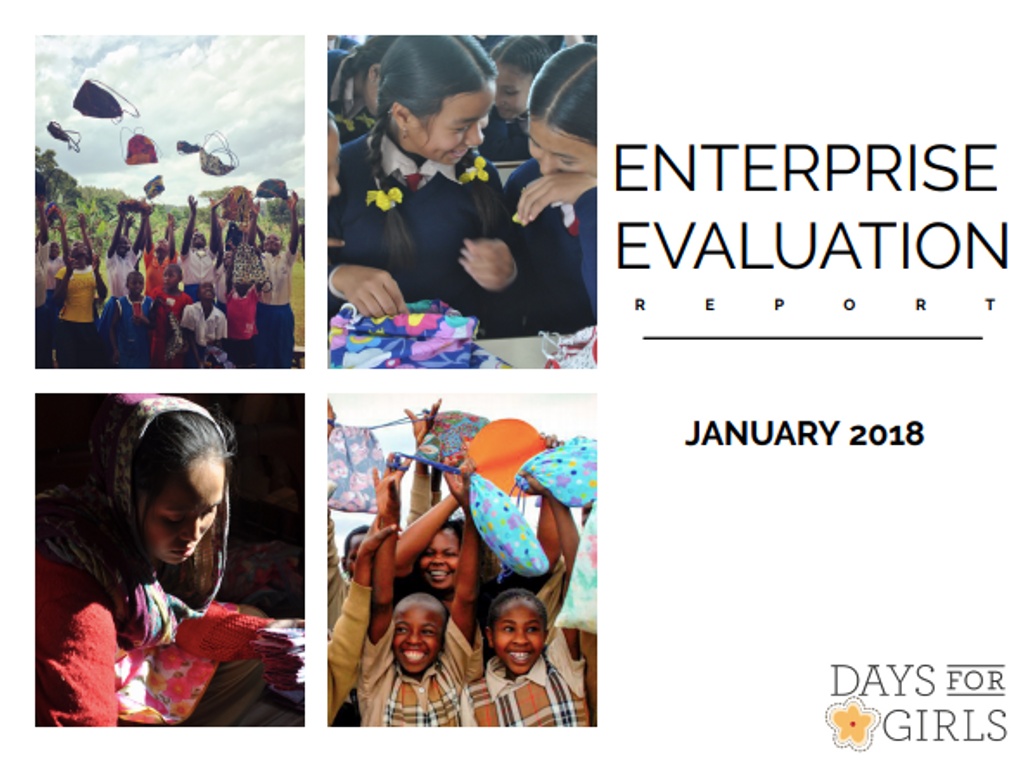
As we prepare to scale even further, we embrace the importance of ongoing research, evaluation, and data. Our 2018 Enterprise Evaluation Report is the first of what will be an annual evaluation process of the Days for Girls Enterprise Program, so that we continue ensuring that our structure and goals are in line with what’s happening on the ground. Thank you to all who have made this possible.